

The 'Renewable' Revolution in SBEM
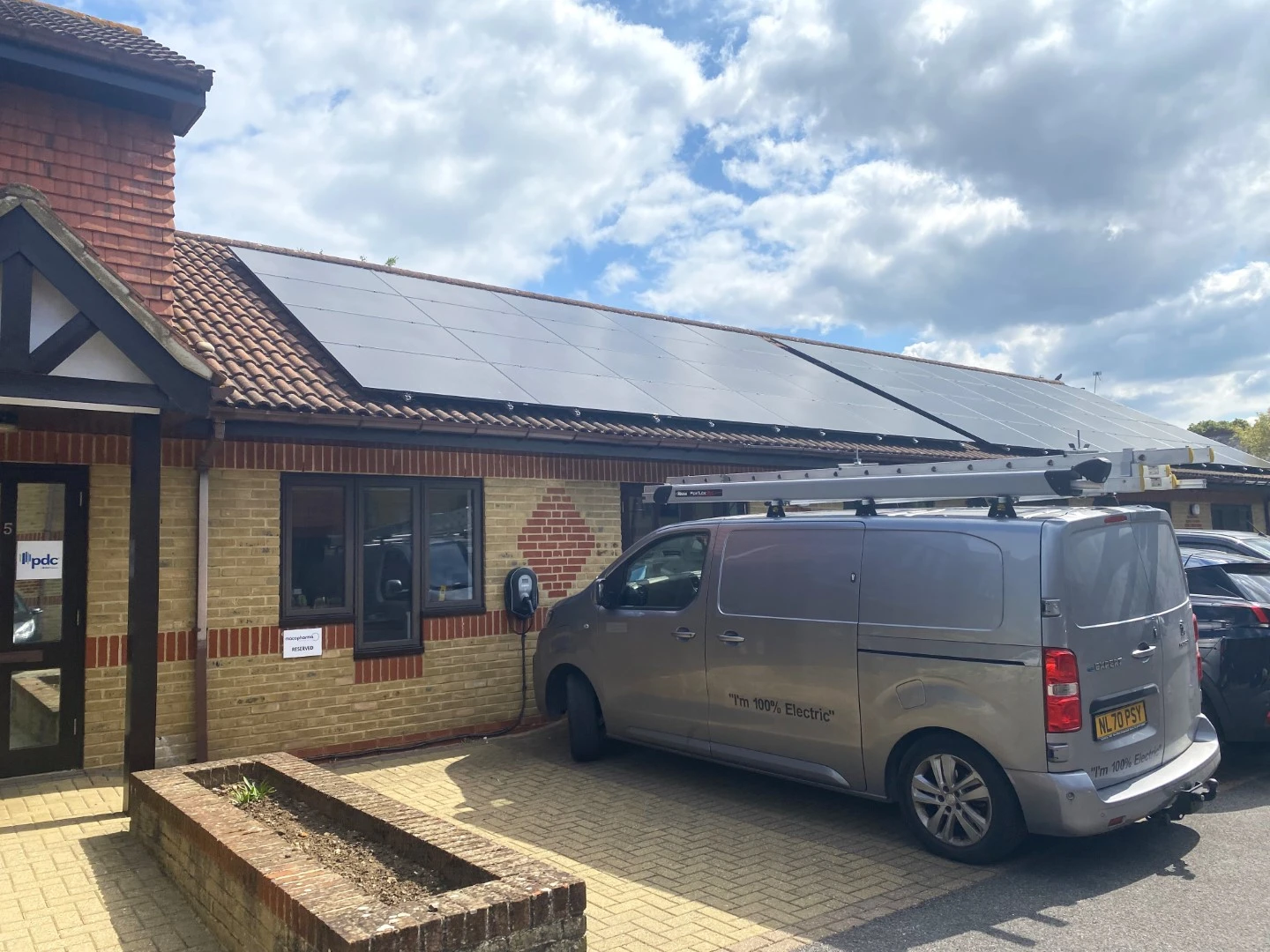
In the quest to reach an EPC Grade B by 2031, many commercial property owners are looking beyond the building fabric and toward the roof. On-site renewable energy generation, specifically Solar Photovoltaics (PV), has become one of the most powerful 'levers' in the Simplified Building Energy Model (SBEM). This article provides a deep dive into how Solar PV is calculated within the National Calculation Method (NCM), the specific points-boost you can expect, and the real-world Return on Investment (ROI) when factoring in energy savings and asset value.
The Physics of the EPC Boost
The EPC rating is fundamentally a measure of the 'Asset Rating'—a calculation of the building's carbon emissions per square meter.
Solar PV can improve a commercial EPC rating by **10 to 25 points**, often moving a property up by one or two full grades (e.g., from C to B). Because SBEM rewards on-site carbon displacement, Solar PV acts as a "carbon offset" for the building's regulated energy loads, such as lighting and HVAC, making it the most effective way to reach MEES compliance without invasive structural work.
Regulated vs. Unregulated Energy
It is important to understand that an EPC only measures "Regulated Energy" (heating, cooling, ventilation, and lighting). It does not care about your computers or kettles. Solar PV is highly effective here because every kWh produced on-site is subtracted from the building's regulated electricity demand.
ROI: Payback Periods in 2026
Five years ago, Solar PV had a 10-year payback. Today, due to rising grid costs and cheaper panel technology, we are seeing payback periods of 4 to 6 years.
Direct Savings: Reducing the amount of electricity purchased at 30p+ per kWh.
Smart Export Guarantee (SEG): Selling excess power back to the grid.
MEES 'Insurance': Avoiding the £150,000 fine for non-compliance.
Technical Integration with MEP
A Solar PV system must be integrated with the building’s MEP services. We explore the role of "G99 applications" for grid connection and why "Export Limitation" devices might be necessary in areas with weak local grids.
Conclusion
Solar PV is no longer a 'bolt-on' sustainability feature; it is a core compliance tool. For buildings with large roof areas, it is often the cheapest way to reach a Grade B.