

The Carbon Factor Shift
For decades, gas was the 'cheap' and 'efficient' way to heat a building. However, the UK's energy mix has changed. As the grid incorporates more wind and solar, electricity has become significantly 'greener' than gas. In the current SBEM (SAP 10.2) calculations, this change has a massive impact on EPC scores. Replacing a gas boiler with an Air Source Heat Pump (ASHP) is now the most efficient way to climb the A-G scale.
The SBEM Carbon Calculation
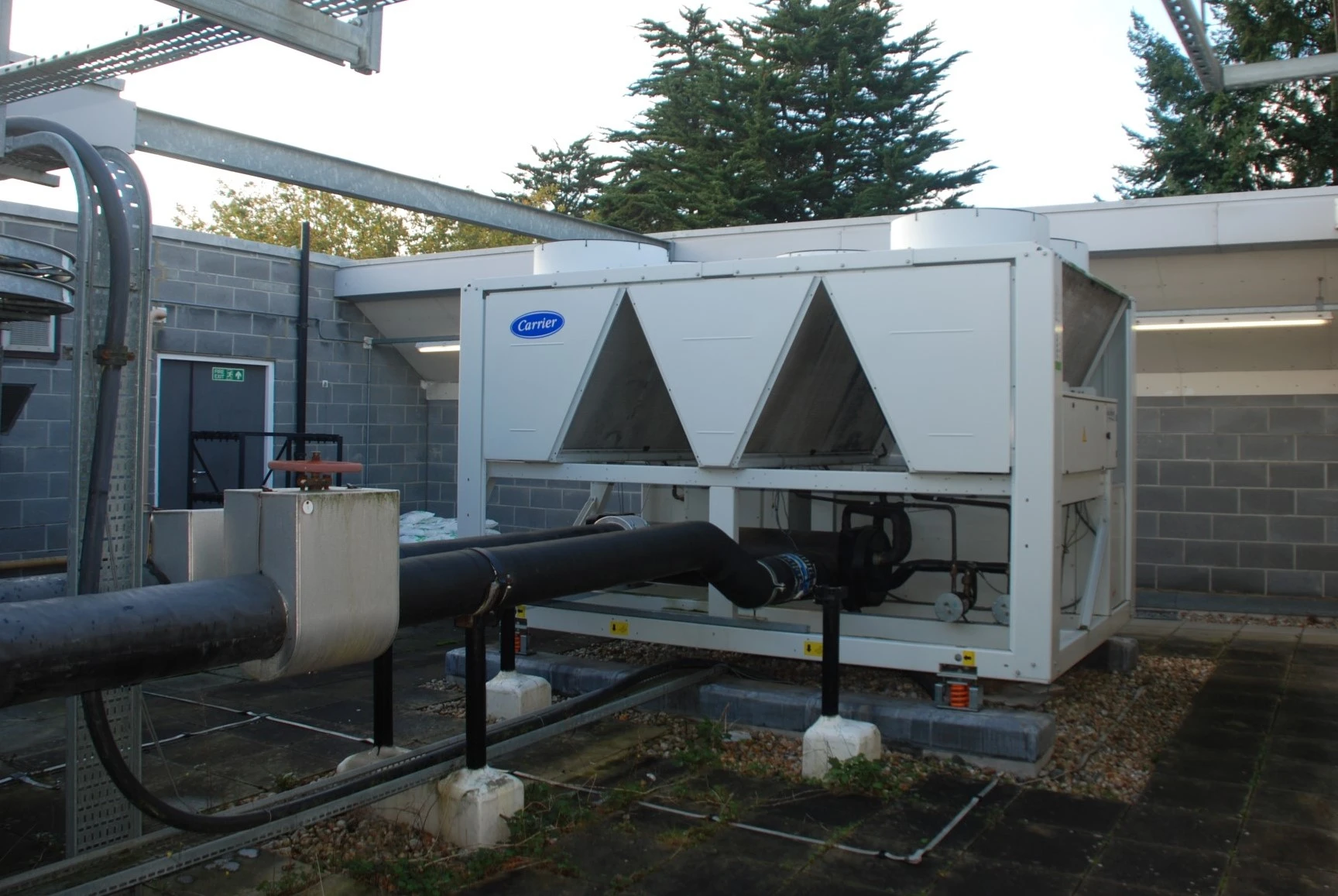
Replacing a gas boiler with an Air Source Heat Pump (ASHP) can improve a commercial EPC score by 20 to 30 points. This is because modern SBEM calculations use a carbon factor for electricity that is nearly 50% lower than gas, and heat pumps operate at efficiencies of 300-400% (COP 3.0-4.0) compared to a gas boiler's 90%.
COP vs. Efficiency
We explain the 'Coefficient of Performance' (COP). For every 1kW of electricity used, a heat pump produces 3-4kW of heat. A gas boiler is always less than 1. This 4-to-1 ratio is the secret to the EPC jump.
Low-Temperature Design and EPCs
To get the full EPC benefit, the heat pump must run at low flow temperatures. We look at the role of 'oversized radiators' or underfloor heating in maximizing the ASHP's performance within the energy model.
Hybrid Systems: Are they worth it?
Can you keep your gas boiler for 'peak' winter days and still get a B rating? We analyze the EPC impact of hybrid bivalent systems.
Conclusion
The EPC software is now heavily 'tilted' in favor of heat pumps. If you are aiming for a Grade B, a heat pump is no longer an alternative—it is the default.
Contact SEA Consulting for an EPC and discussion about Heatpumps:
Email: epc@seaconsulting.co.uk
Phone: 020 8744 0544